
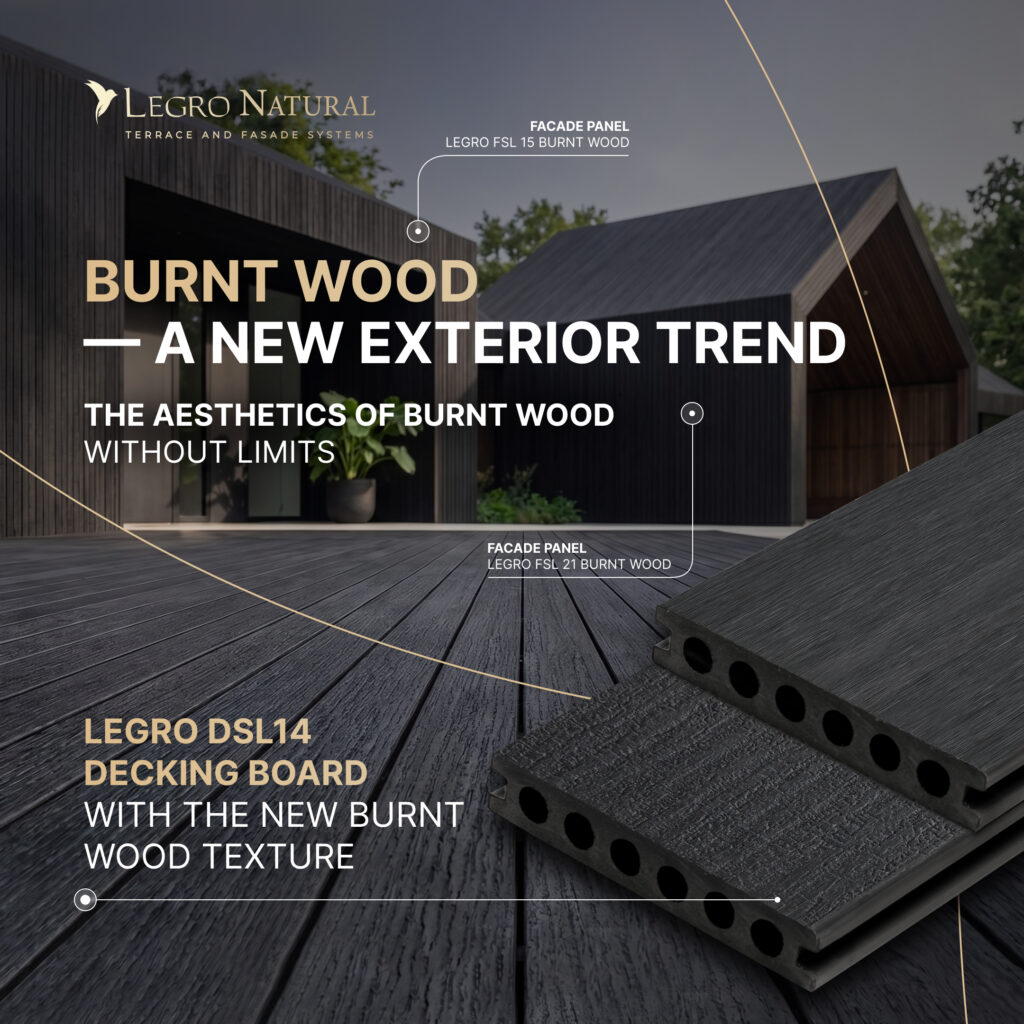
Architecture of Dark Depth. Natural Authenticity Preserved Through Time.
In contemporary architecture, some materials transcend the role of mere cladding. They shape the character of a building and become part of its architectural statement.
Legro Burnt Wood is one of those materials. Its texture is inspired by the ancient Japanese technique of Shou Sugi Ban — a traditional wood-charring method originally developed to protect timber from moisture, insects, and the effects of time.
Over the years, this practical technology evolved into an aesthetic phenomenon. Its deep black relief, velvety surface, and expressive interplay of light transformed charred wood into one of the most recognizable architectural finishes in the world.
Today, this aesthetic has become an integral part of leading architectural movements:
- Japandi
- Wabi-Sabi
- Contemporary Minimalism
Dark façades enhance a building’s geometry, create striking contrast, and add visual depth to architecture. Yet natural charred wood remains a living material. It requires maintenance, may shed over time, gradually changes its appearance, and most importantly, its production requires newly harvested timber.
This is precisely why the Burnt Wood texture was introduced into the Legro system.
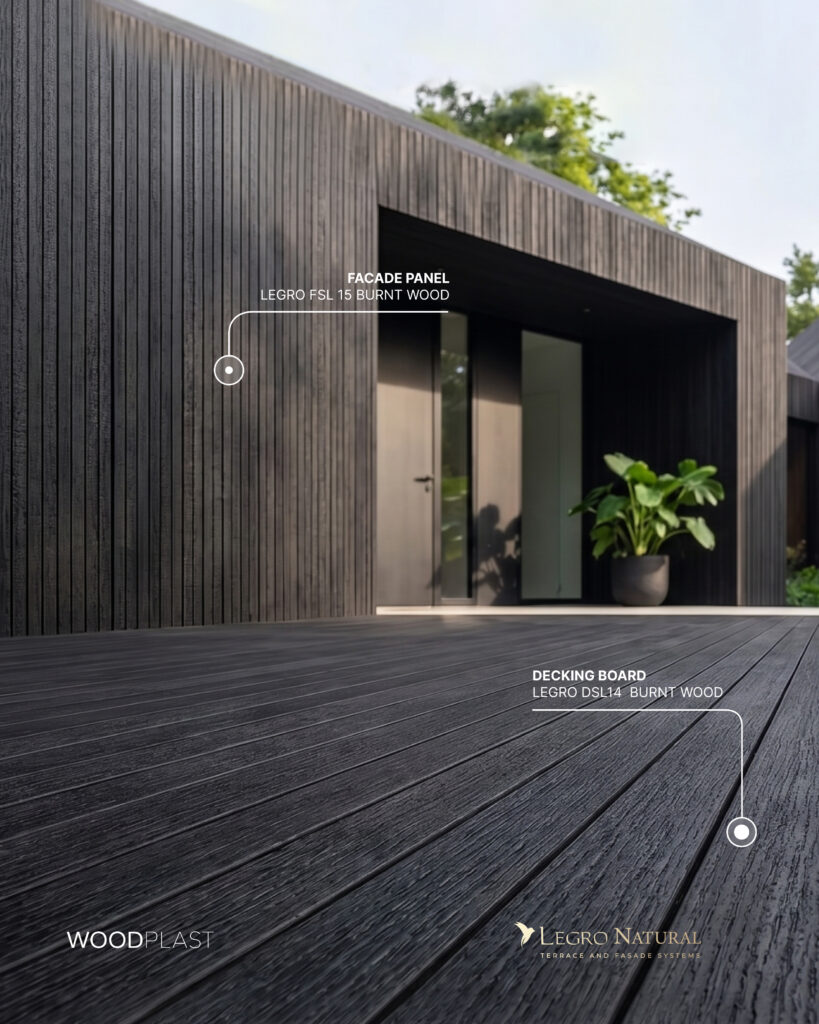
The Burnt Wood Architectural System
When developing Burnt Wood, the goal was not simply to create an attractive texture. The objective was to provide architects with a comprehensive design tool for façades and architectural spaces. For this reason, the texture is available across three Legro system formats.
FS15
A façade profile designed to create a rhythmic vertical dynamic. It enhances the graphic character of the façade, introduces architectural precision, and visually elongates building proportions.
FS21
A wider slat designed for calm, monumental surfaces. Ideal for large architectural volumes and minimalist façades.
DS14
A decking board featuring the same Burnt Wood texture. It enables seamless integration between façades and horizontal surfaces, creating a unified architectural language.
These are not simply different profile dimensions. They provide architects with the ability to control rhythm, scale, and the plasticity of architectural forms.
One style. Three architectural tools.
Natural Authenticity Without Vulnerability
Burnt Wood is neither a painted coating nor a decorative film. The texture is formed directly within the material itself, making it exceptionally durable and long-lasting.
Unlike natural charred wood, it:
- Requires no annual treatment
- Does not shed over time
- Is resistant to moisture
- Maintains dimensional stability
Unlike many façade materials, it offers:
- No risk of coating delamination
- No fading
- No need for refurbishment after a few seasons
The material preserves its architectural appearance without demanding maintenance.
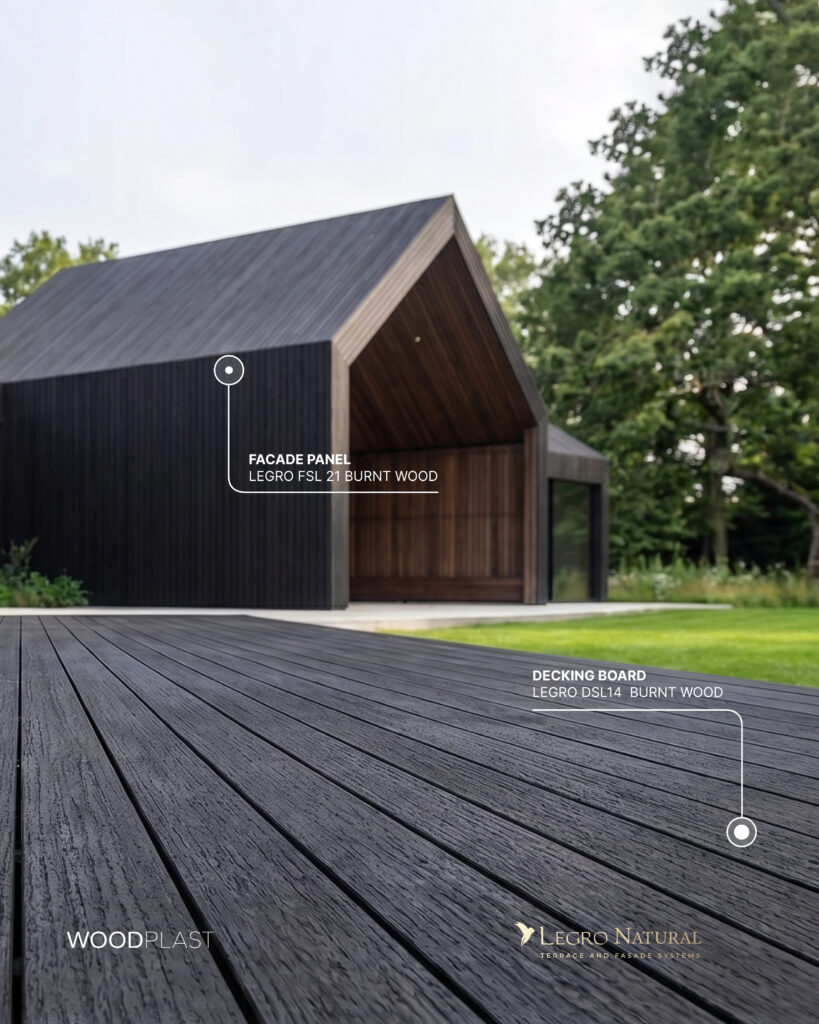
Sustainability as Architectural Responsibility
While creating Burnt Wood, the Legro team asked a simple question: Why should new trees be cut down simply to achieve the aesthetic of charred wood?
Legro gives wood a second life. More than 80% of the material consists of recycled components:
- Recycled wood flour
- Reused polymers
- Reprocessed raw materials without loss of quality
This allows the aesthetic of charred timber to be preserved without contributing to deforestation.
Sustainability here is not a marketing trend. It is a manufacturing principle.
25 Years of Stability
Legro Burnt Wood is part of the Legro façade system and is backed by an official 25-year warranty.
This means:
- Color stability
- Retention of texture depth
- Dimensional consistency
- Long-lasting architectural performance
The visual impact created at the moment of installation will remain intact after 10, 15, and even 25 years.
- No annual treatment.
- No re-charring.
- No façade replacement.
The emotional appeal of a natural material is combined with the predictability of engineered performance.
When a Trend Becomes an Architectural Language
Dark façades have long ceased to be an experiment. Today, they have become a new architectural classic.
Burnt Wood works through contrast:
- Enhancing landscape greenery
- Highlighting glass surfaces
- Making concrete appear cleaner and more expressive
- Adding depth to building volumes
This is a texture for those who choose character rather than decoration.
The Burnt Wood Philosophy
In creating Burnt Wood, the Legro team combined several key principles:
- The aesthetic of charred wood
- Advanced manufacturing technologies
- Durability and stability
- Maintenance-free performance
- Recycling and responsible resource use
We preserved the depth and authenticity of a natural material, while eliminating its vulnerabilities.
Burnt Wood is architecture that looks alive, yet performs like an engineered material.
