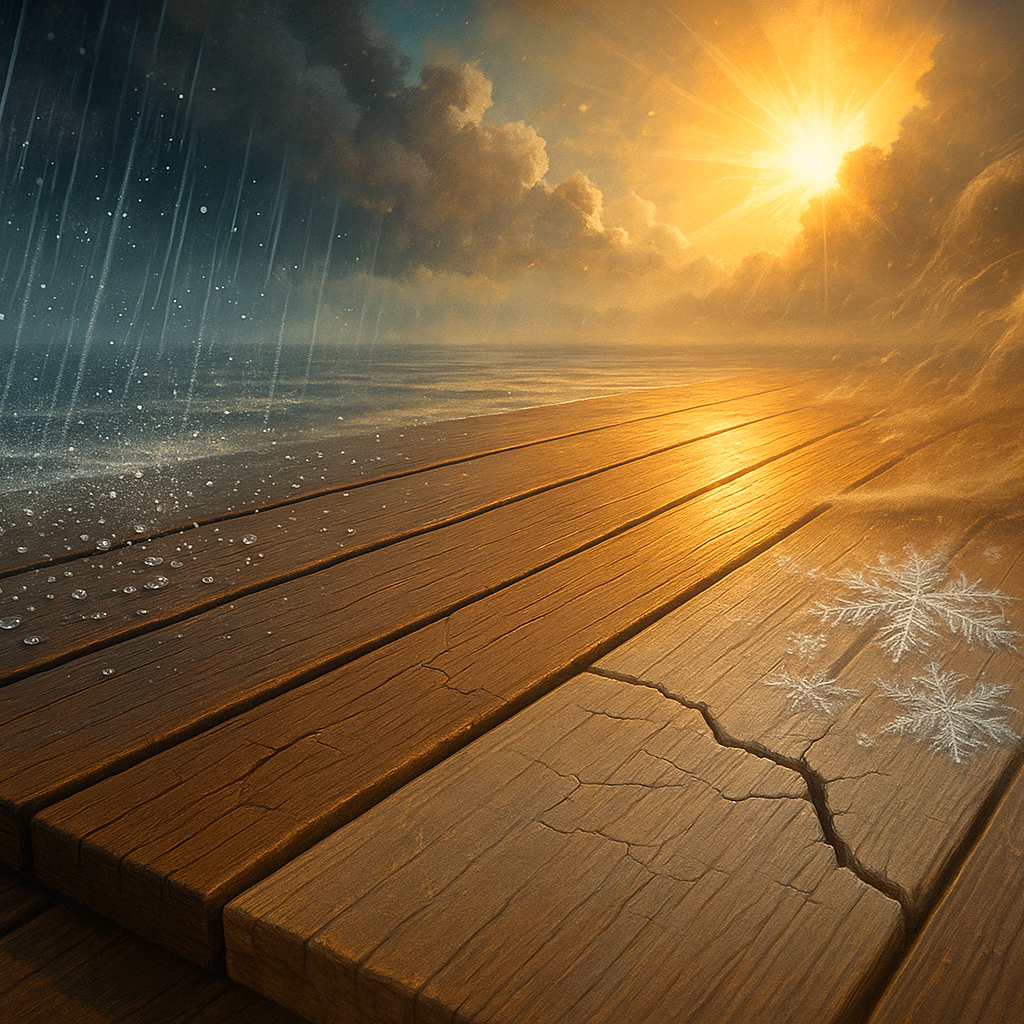




Visualisations are always attractive. On renders you see perfect terraces: even boards, rich colour on the surface, sunlight playing on the texture. But a render doesn’t take into account that your country may have heavy downpours. Or a night frost after a warm day. Or gusts of wind carrying dust.
And your terrace will feel it very quickly — already in the second year of use.
Because in reality a terrace is not just a beautiful relaxation area. It’s a decking that must withstand rain and heat, frost and wind, temperature swings. And that can become a real challenge for any board.
When Moisture Becomes the Enemy
In a humid climate a terrace lives under constant threat.
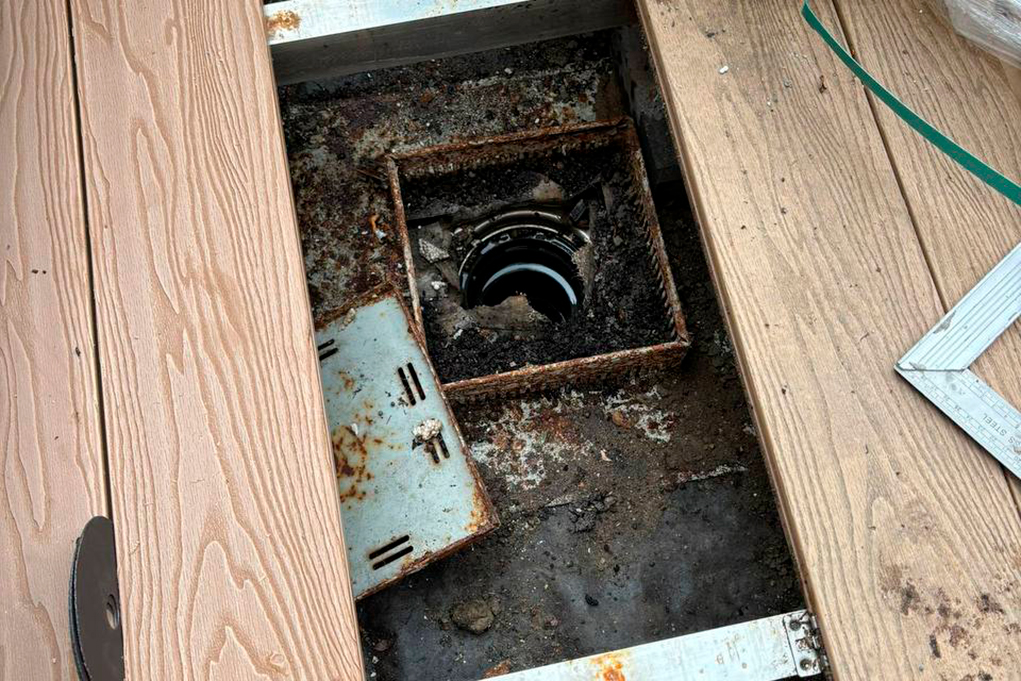
Water penetrates joints, board ends and the material’s pores. If the board isn’t well sealed or is hollow inside — moisture accumulates within. When the temperature drops this moisture freezes and literally tears the board’s structure apart from the inside.
Therefore in regions with frequent rain, high humidity or a prolonged damp spring it’s vital to choose only between two options: a board that is completely sealed from the outside (co-extruded), or a board without internal voids (solid).
Another very important point: in such areas a terrace must always be installed with a fall. Water must drain away, not pool.
When the Sun Becomes the Enemy
In a hot climate the main threat to a terrace is not fading, as many think, but overheating and drying out. Especially if the board is dark-coloured. Sometimes the surface can become so hot that you can’t walk barefoot on it.
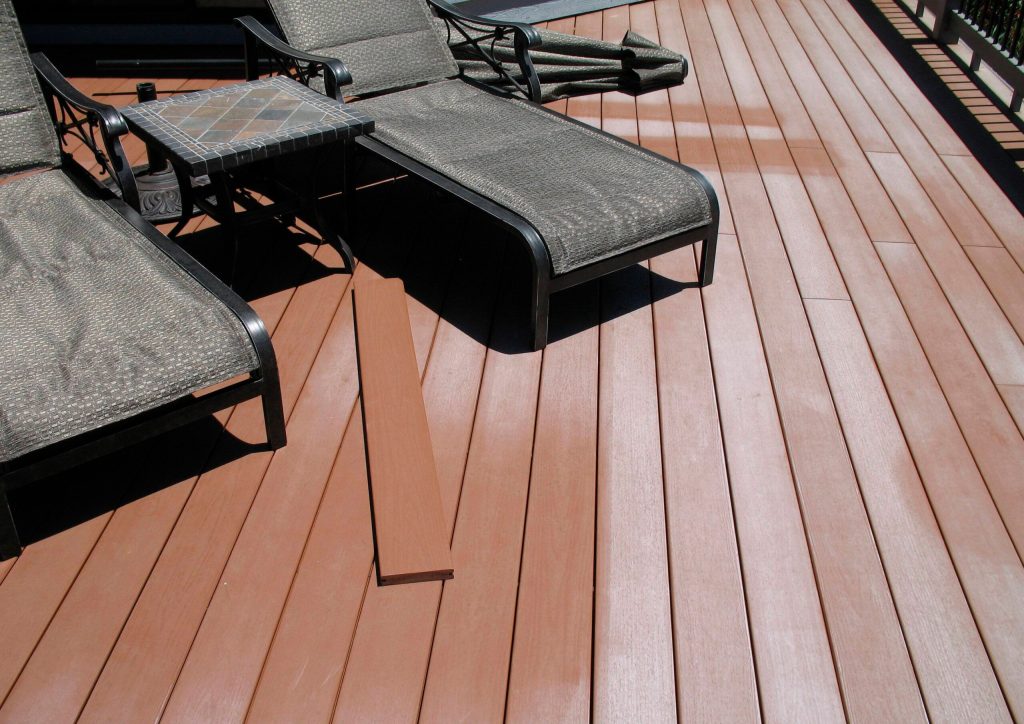
Moreover, ultraviolet rays break down the pigments. If your board doesn’t have reliable UV protection it will begin to fade after just one or two years.
And it will fade very unevenly: in spots and stripes, with dull areas where the sun hits more often.
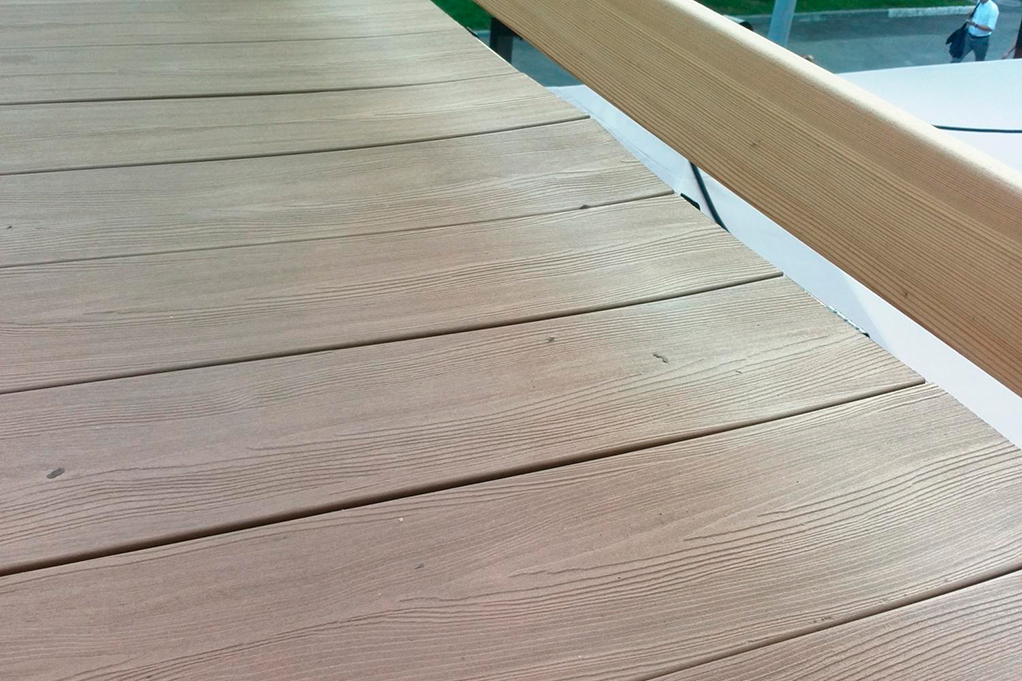
In such conditions boards in light shades with a protective layer blocking UV radiation are best. Such a board will heat up less and preserve its appearance longer.
When Temperature Fluctuations Become the Enemy
If you build a terrace where it’s hot by day and suddenly cold at night — be careful. Constant temperature swings cause the material to expand and contract. If the necessary gaps weren’t left during installation, or if the boards are too long — they will begin to warp, deform and even tear out the fixings.
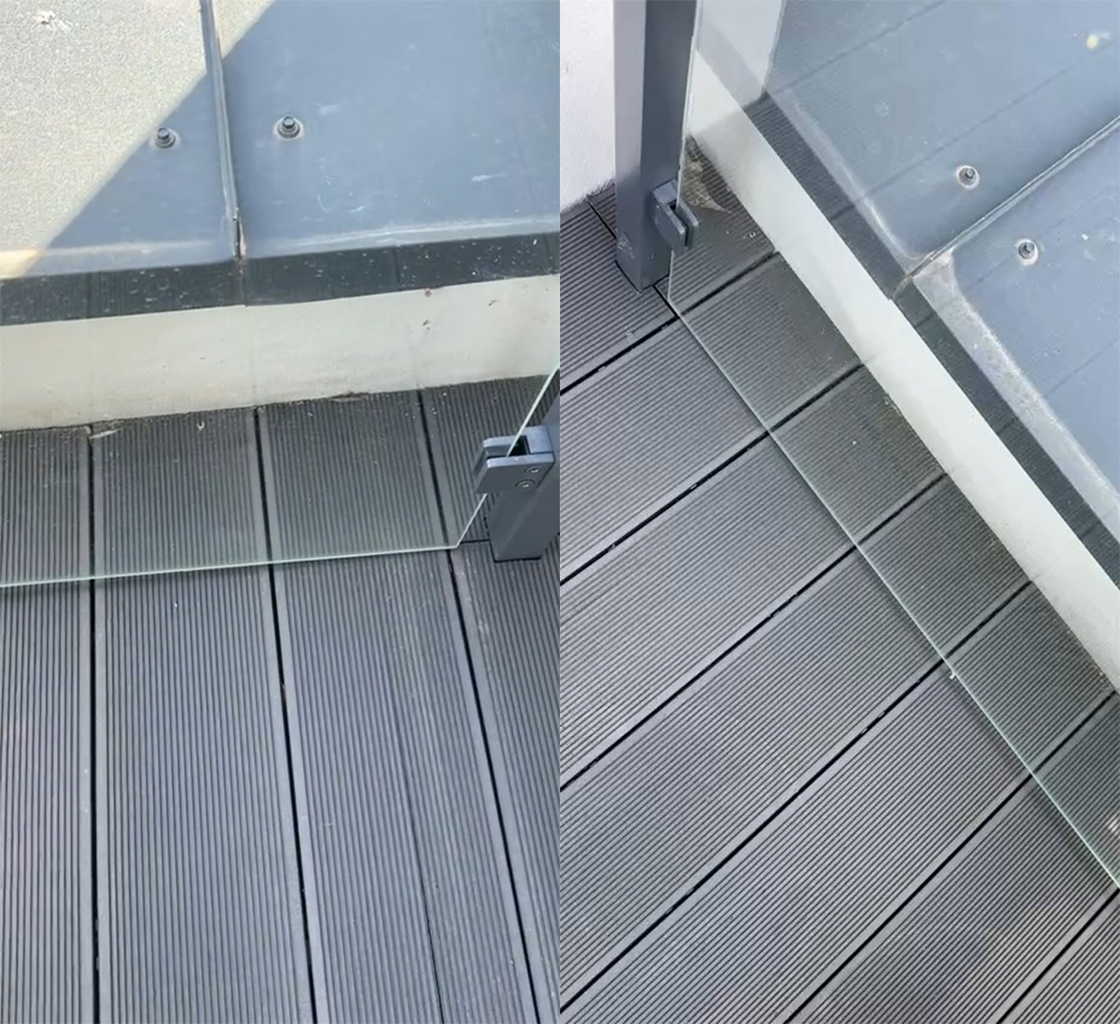
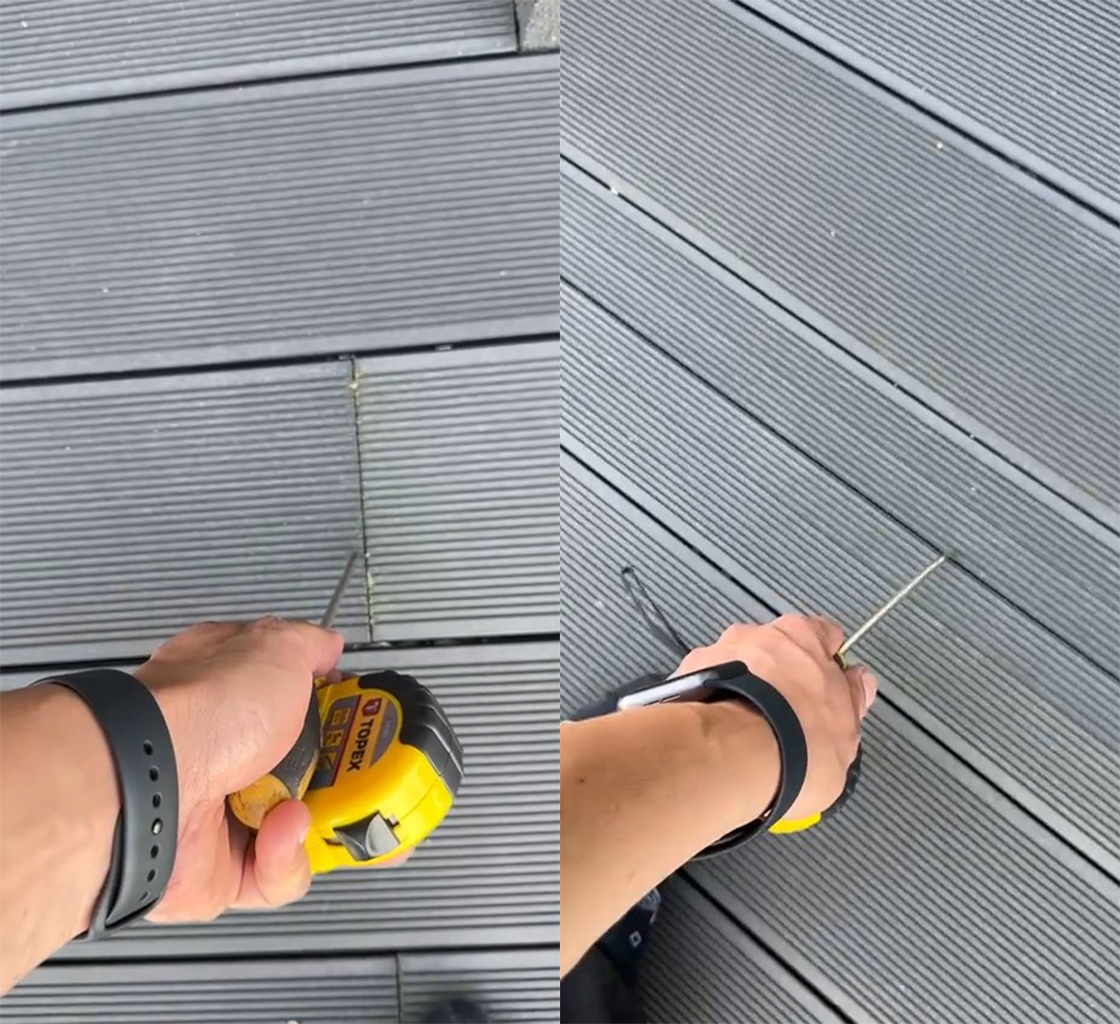
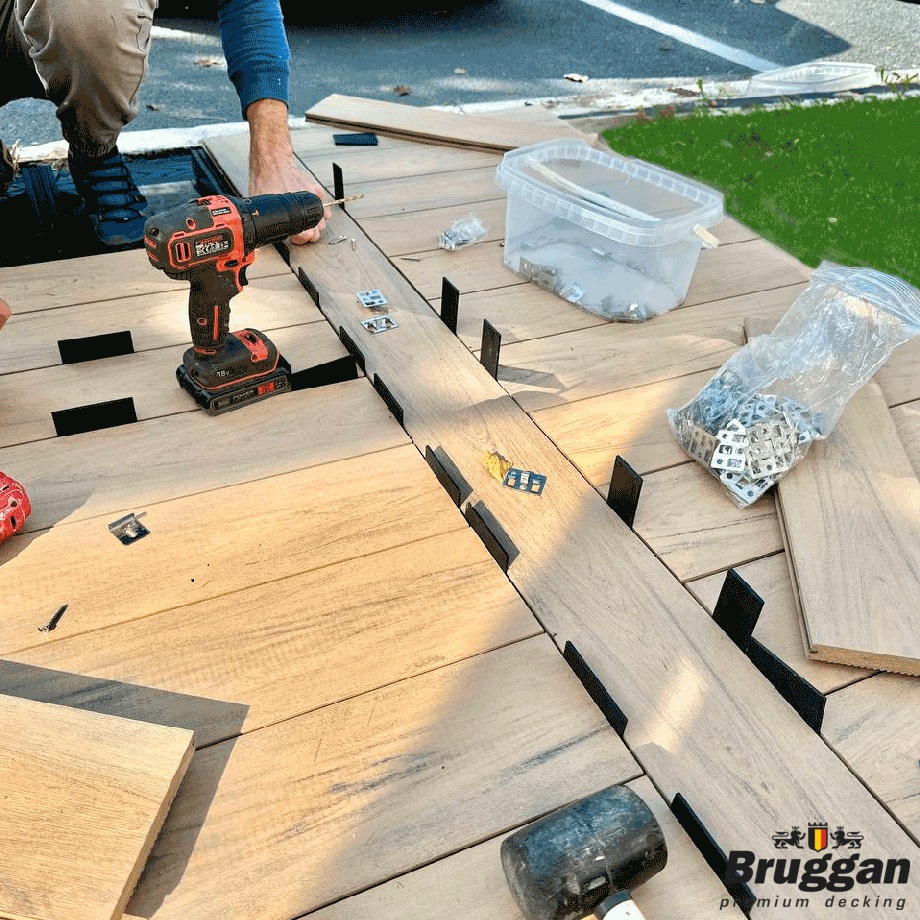
The solution in this case is correct engineering. First, don’t use excessively long runs without gaps. Second, take temperature fluctuations into account when planning installation and choose a board with high dimensional stability. That’s when the quality of the material shows.
Wind. An Underrated Threat
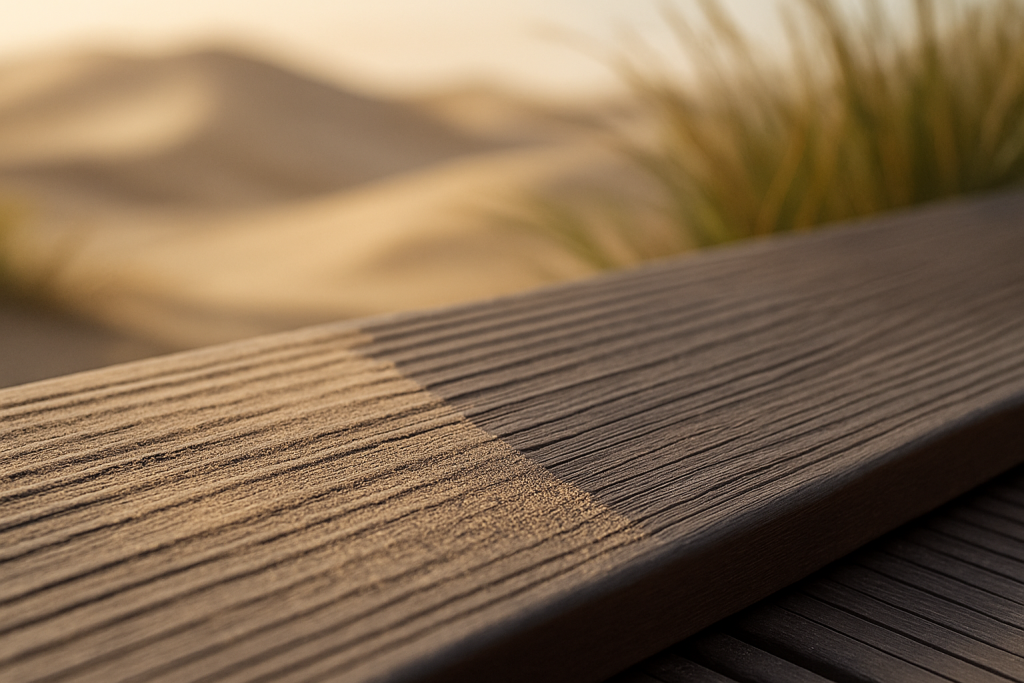
Few people consider wind a threat to a terrace. But they should. Because wind almost always brings with it dust, sand, salt (if the terrace is by the sea) and dry dirt. All of this acts daily like fine sandpaper on your surface.
If the surface is budget and soft — you will notice it immediately: it will become dull, develop micro-scratches, lose depth of colour and look “tired.” Especially in areas with frequent foot traffic.
What helps? You need to choose a board that is abrasion-resistant. Or a material that can be sanded down, refurbished and restored to life. Everything else is a temporary solution.
How to Choose?
If the climate in your region is hot and sunny — choose a light-coloured board with good ultraviolet protection. If it’s humid — look for a solid structure or a co-extruded protective layer and always install with a slope for water drainage. If there are strong temperature fluctuations — mind the gaps and avoid long spans. If the terrace is built in a windy area — abrasion resistance and mechanical surface strength are crucial.
Bruggan Multicolor and Legro Dunes boards are not simply a “universal product” for different climatic conditions. They are tested in climatic chambers simulating specific regions — be it the humidity of the UK, the heat of Spain or the frosts of Scandinavia. Before reaching the market each model undergoes adaptation to real-world conditions. And only after that does it appear on terraces — from the Atlantic coast to the mountain regions of Poland.
Bruggan Multicolor is a solid board with wood texture through its entire thickness. It does not fear moisture, frost and even after years it can be easily restored. Legro Dunes is a board with a durable protective layer that repels moisture, blocks ultraviolet rays and even withstands strong winds.
These are the materials chosen today by architects and designers who care not only about the beauty of a terrace but also about its durability.