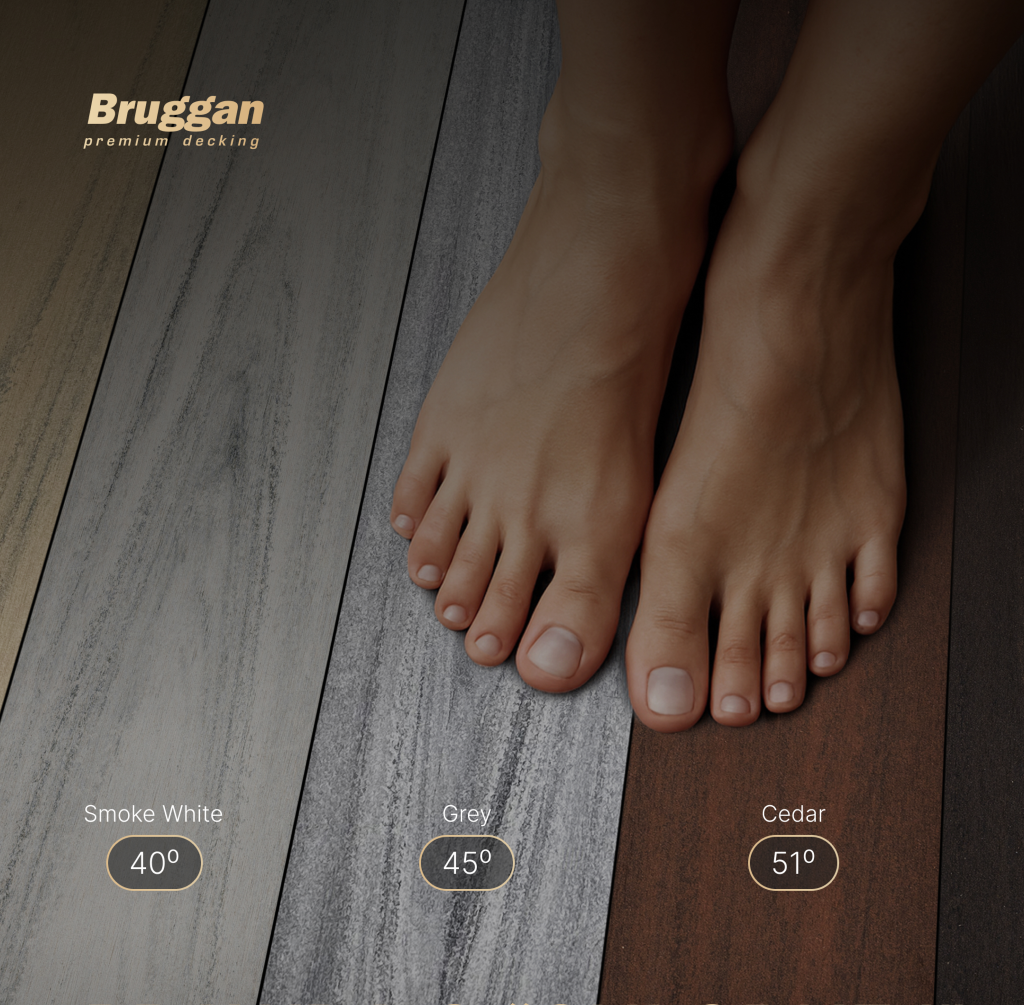



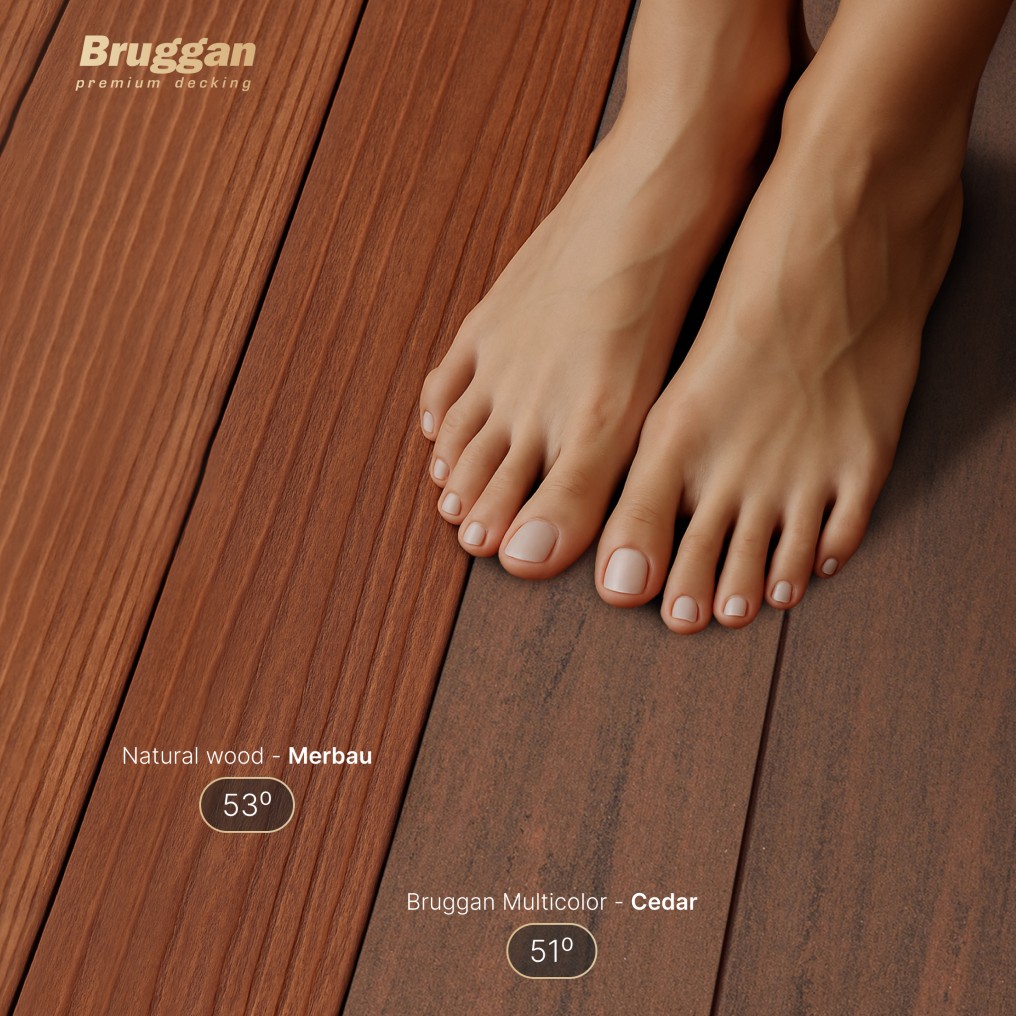
One of the most frequently asked questions clients have when choosing decking is: “Will it get too hot in the summer, and will it be possible to walk on it barefoot?”
Almost 90% of terraces are open-air constructions. They’re not just adjacent to private homes, but also found at cafes and restaurants, pool areas, balconies, and rooftops. As a result, they are exposed to direct sunlight every day.
Let’s explore which types of decking heat up the most, what you can do if the surface becomes too hot, and how to choose a material that remains comfortable to walk on barefoot.
Why Does a Terrace Heat Up?
Key factors that affect the temperature of your decking:
- Color
Darker shades (graphite, wenge, anthracite) heat up more than lighter ones (sand, grey, beige). It’s basic physics: dark colors absorb more sunlight.
- Material Composition
- WPC (wood-polymer composite) decking contains wood flour and polymer, which gives it moderate thermal conductivity.
- Co-extruded boards are coated with a protective polymer layer. These models usually have a smooth surface that heats up more.
- Natural wood heats up less, but requires thorough maintenance and considerable time and money investment.
- Surface Type
Smooth or glossy surfaces feel hotter to the touch. Textured or matte finishes absorb less heat and dissipate it more effectively.
- Terrace Location
An open, south-facing terrace without a canopy will always heat up more than a shaded or partially protected one.
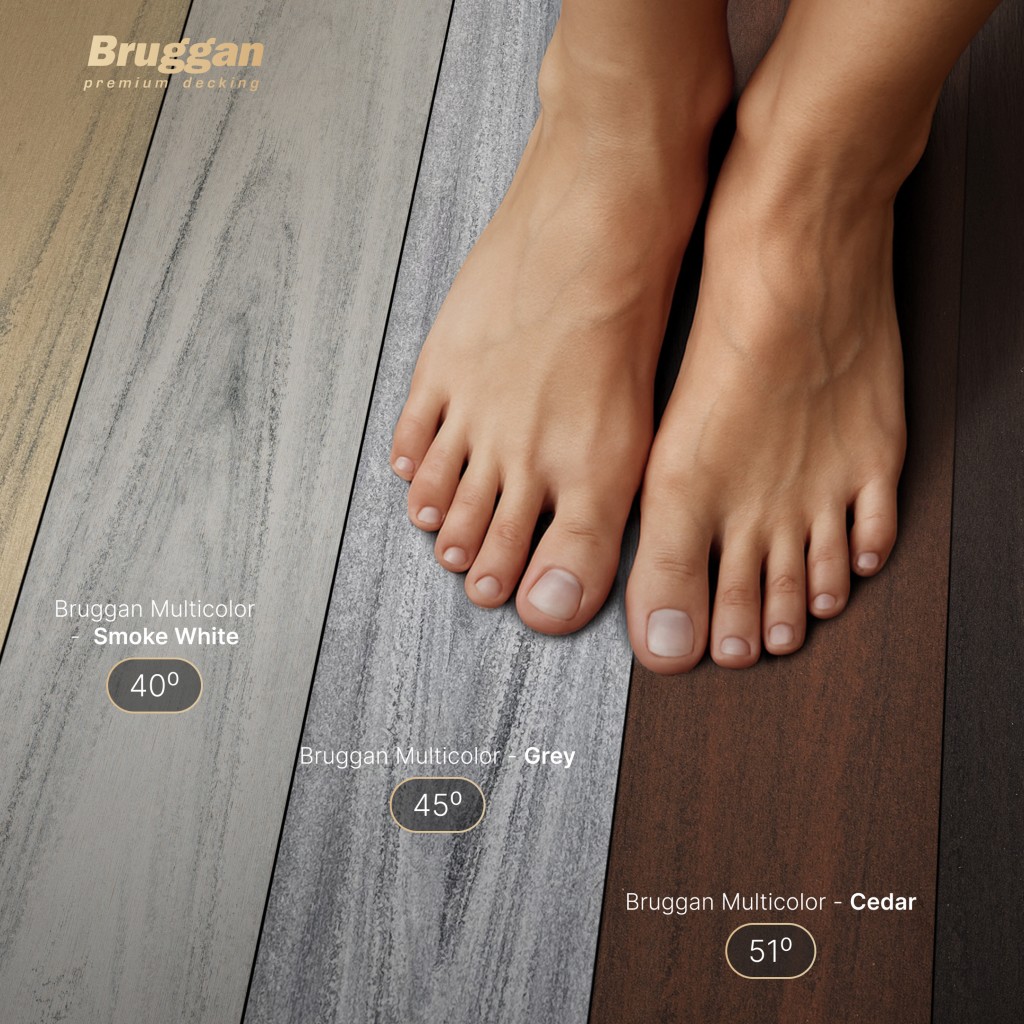
A comfortable temperature for bare feet is around 50–55 °C. Anything above that may cause discomfort or even burns, especially for children or pets.
Which Decking Materials Stay Cooler?
- Lighter colors absorb less heat, so for sunny, open areas choose beige, sand, light grey, or white tones.
- These not only look natural and airy but also stay cooler. For example, Bruggan Multicolor Smoke White, Bruggan Elegant Cream Latte, and Legro Evolution Fashion White heat up approximately 30% less than darker options.
- Matte, textured surfaces not only provide slip resistance and a non-glare finish but also stay cooler — ideal for poolside areas or children’s zones.
- Decking without a polymer coating often regulates heat better than smooth co-extruded models.
What to Do If Your Terrace Already Gets Too Hot?
- Install a canopy or pergola — even partial shading can reduce surface temperature by 10–15 °C.
- Use outdoor rugs, wooden slats, or modular decking mats — they create a more comfortable barefoot surface.
- Opt for light-colored furniture and decorative elements — they help shade part of the decking and add visual balance.
- Rinse the terrace with water during the hottest hours — the effect is temporary but noticeable.
How to Choose Decking That Won’t Burn Feet?
- Ask your supplier about the thermal characteristics of the material. Reputable brands like Bruggan and Legro test their products for heat buildup.
- Conduct a sample test — leave samples in the sun for an hour, then try walking on them barefoot.
- Consider your terrace’s orientation: for south-facing areas, it’s better to choose light and cooler-looking models from the start.
The issue of decking overheating is real — but manageable.
Choosing the right color, surface type, and layout will help make your terrace comfortable for barefoot use even on the hottest days.
There’s no such thing as a completely “cool” deck board — but you can always find the optimal solution for your outdoor space.